
Loop Quest
GRAND-ATTICBoard
4.183.00 Reviews
- Version
- 0.10.2
- Installs
- 10.00K
- Age Rating
- Teen
Screenshots


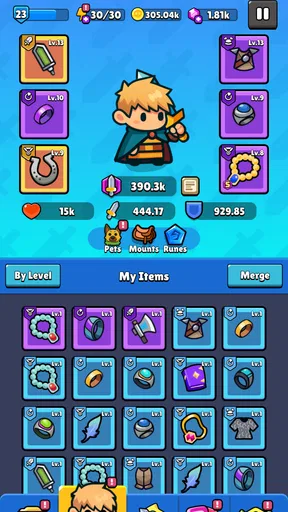


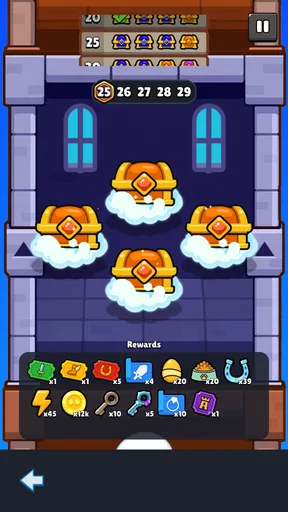
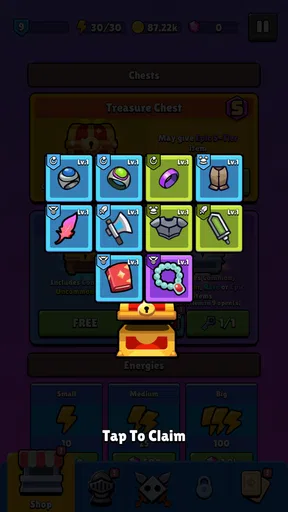

Our Review of Loop Quest
 Analysis by Appyee
I approached Loop Quest expecting a light board game built around quick decisions, but its appeal became clearer after a few rounds. The basic idea is easy to understand: roll, move through the loop, collect treasure, and deal with enemies along the way. What makes the experience more interesting is the way those simple actions compete for your attention. A safe move may keep a run alive, while a riskier choice can give you the resources needed to make real progress.
That makes this a useful game for people who enjoy board-style play but do not want to learn a long rulebook first. You can start with the obvious actions and gradually notice the choices beneath them. I would describe it as a casual board game with a light adventure feeling rather than a traditional tabletop conversion. It is free to start, developed by GRAND-ATTIC, and aimed at Teen players. The current version is 0.10.2, and it runs on devices using Android 6.0 or later.
Getting comfortable with the loop
The first thing I would tell a new player is not to treat every roll as a command. The dice decide the immediate movement, but the useful decision often comes afterward: whether to chase a treasure, prepare for an enemy, or accept a less exciting route that protects the run. That distinction is important because the board can look simple while still asking you to manage risk.
On the first launch, I recommend taking a minute to identify the main visual signals before trying to play quickly. Look for the current position, the next destination, available treasure, and any enemy that could change the value of your move. You do not need to memorize everything. The goal is simply to know what deserves attention when the result of a roll appears.
My first meaningful success came from slowing down rather than trying to collect every attractive reward. I treated the early turns as a way to learn the route, then used a later opportunity to take a more ambitious action once I had a better sense of the danger. That approach is more reliable than tapping through the board as if it were an idle game. The best early habit is to read the board before spending your next opportunity.
New players may also wonder whether the game is suitable for a short break. In my experience, yes, provided you are comfortable with a little uncertainty. The dice keep each session from feeling completely scripted, so it works well when you want a compact decision-making game rather than a long competitive match. It is less suitable if you want precise control over every movement or a purely relaxing experience with no setbacks.
What the first few turns teach you
The opening turns are mainly about learning the relationship between movement and reward. A treasure is not automatically valuable if reaching it places you in a poor position. Likewise, an enemy is not always something to avoid immediately; sometimes dealing with it is part of creating a better route. I found that the game becomes more satisfying when I stopped judging moves only by their immediate reward.
A practical routine helped me. After each roll, I checked three things: where the movement ended, what could be gained there, and what problem the next turn might create. This takes only a few seconds, but it prevents the most common beginner error, which is focusing on the bright reward while ignoring the cost of reaching it.
The board-game format also makes the game feel different from a typical action adventure. You are not relying on reflexes or fast swipes. The tension comes from uncertainty and timing. If you usually enjoy dice games, route planning, or turn-based choices, the structure should feel approachable. If your favorite mobile games are built around direct control and constant motion, the pace may seem restrained.
Handling treasure without chasing everything
Treasure is the most tempting part of the experience, and it is easy to let it dictate every decision. I found better results by treating each reward as part of a route instead of as an isolated prize. Before committing, I considered whether the move helped me continue safely or merely looked profitable for one turn.
This is also where the game gives patient players an advantage. A modest reward that keeps the run stable can be more useful than a larger reward followed by an awkward encounter. That does not mean playing cautiously all the time. It means choosing risk when it serves a purpose. For example, I would take a dangerous option when it opened a path toward a stronger position, but avoid it when I was already carrying enough progress to justify protecting the run.
That trade-off gives the game more personality than a simple roll-and-collect board. It also explains why two players can approach the same situation differently. One may prefer steady gains, while another accepts more danger for a chance at faster progress. Neither style is automatically correct, although beginners will probably find the conservative approach easier while learning the board.
When enemies change the decision
Enemies are not just obstacles placed between the player and treasure. They change how I evaluate the whole turn. A move that looks efficient on an empty board can become a poor choice once an enemy is involved. I learned to check the enemy’s location before committing to a route, especially when a roll could put me closer than expected.
The useful tip here is to avoid making enemy decisions emotionally. Losing a possible treasure can feel frustrating, but forcing the issue can create a worse position. I often preferred to let one opportunity pass when the alternative was to turn a manageable run into a desperate one. This is the kind of small judgment that the store summary cannot explain, and it is where the board-game design earns its keep.
At the same time, players who dislike setbacks should know what they are getting into. Dice-based movement means a careful plan can still be disrupted. The game gives you choices around the roll, but it does not remove uncertainty. I see that as part of the charm, not a flaw, though it may bother anyone looking for a fully deterministic puzzle.
Understanding the free starting experience
Loop Quest is free to download, which makes it easy to try without committing money first. It includes in-app purchases ranging from $0.99 to $99.99 per item. I would advise new players to spend time learning the basic loop before considering any purchase. The most important early improvement is understanding how to evaluate movement, treasure, and enemies; paying before developing that judgment will not make the board easier to read.
The presence of optional purchases also affects who I would recommend it to. It is a reasonable choice for someone happy to sample a free board game and decide later whether it deserves extra spending. For a child’s device, however, I would use the Teen age guidance as a reason to involve an adult in the decision and review purchase controls before handing the game over. That is practical preparation, not a criticism of the core play.
The game has an average rating of 4.1 from over 700 ratings, with more than 80 written reviews, and it has passed 10 thousand installs. Those figures suggest a modest but real player base rather than a huge mainstream audience. I would read that as a reason to approach it as a developing niche game: appealing if its dice-and-route structure matches your taste, but not something to choose merely because everyone is already playing it.
Where it fits among board games
Compared with a classic digital board game, Loop Quest places more emphasis on adventure-style goals. You are not simply racing around a track or waiting for a score. Treasure and enemies give the movement a reason, so each roll can be judged in terms of survival, reward, and future positioning.
Compared with a strategy game that gives complete control, it is more forgiving in terms of rules but less predictable in terms of outcomes. You can make thoughtful choices, yet the dice remain part of the conversation. That makes it a better fit for players who enjoy adapting than for players who want to calculate a guaranteed solution.
It also differs from fast arcade games because the satisfying moment is usually a good decision rather than a quick reaction. I can play it while taking a short break and still feel that I made progress through my own judgment. On the other hand, anyone seeking deep multiplayer competition, a large narrative campaign, or highly detailed tactical systems may find the experience too focused on its central loop.
Small habits that improve the first session
I would begin by playing slowly enough to identify what each board element means. Do not worry about making the perfect first run. Instead, use it to learn how far a roll can take you, how treasure affects your priorities, and how enemies alter safe routes.
Next, try to name your reason for each risky move. “I am taking this route because it improves my position” is a better plan than “this reward looks good.” That simple explanation keeps the game from becoming random tapping and helps reveal whether the risk is actually worthwhile.
Finally, compare your result with your decisions, not only with the outcome. A bad roll does not automatically mean the plan was bad, and a lucky reward does not prove that every aggressive move is wise. This mindset makes the game less frustrating and helps you improve through repeated short sessions.
Who should install it, and who should skip it
I recommend Loop Quest to players who like board games with dice, light route planning, and a clear mixture of reward and danger. It is especially approachable for someone who wants an adventure-flavored game without learning a complicated system before the first turn. The free entry point makes experimenting straightforward, while the current version gives curious players a simple way to see whether the loop suits them.
I would skip it if your priority is direct action, complete control, or a large amount of content immediately. The randomness is central, not incidental, and the game’s enjoyment depends on accepting that a good plan may need to be adjusted. I would also choose a more traditional board-game app if you want familiar tabletop rules rather than a treasure-and-enemy journey.
For me, the strongest use case is a short evening break: I can open it, make a few considered rolls, and stop after a meaningful decision instead of needing to finish a long campaign. The weaker use case is a session where I want guaranteed progress every minute. Loop Quest asks for patience with uncertainty, and that is the main question to answer before installing it.
My recommendation after learning the basics
Once the first successful run feels comfortable, the next step is to experiment with a different risk style. If you played cautiously, try taking one deliberate chance when the potential reward clearly improves your position. If you played aggressively, try protecting a promising run and see whether consistency produces better results. This turns repetition into practice rather than simple replay.
I also suggest keeping purchases separate from your learning process. Enjoy the free structure first, understand what decisions you actually value, and only then decide whether spending fits the way you play. The game is at its best when the reward comes from reading the board and adapting to the roll, not from treating every obstacle as something to bypass.
Overall, I found Loop Quest easy to approach but more thoughtful than its compact premise suggests. GRAND-ATTIC has built a board game where dice create uncertainty, while treasure and enemies give that uncertainty direction. It is not the right choice for everyone, but if you like making small strategic calls under changing conditions, I think it is worth trying. Start slowly, protect your first promising run, and let the game’s loop reveal its depth before deciding how far you want to take it.
Verdict
Strengths of Loop Quest
- Simple controls make it easy to start playing immediately.
- Short levels fit well into quick gaming sessions.
- Loop-based mechanics encourage experimentation and replayability.
- Minimalist visuals keep the gameplay area clear and readable.
- Increasing challenges provide a steady sense of progression.
Limitations of Loop Quest
- Some players may find the repetitive loop mechanics become monotonous.
- Progress can feel slow without frequent new gameplay elements.
- Limited visual variety may reduce long-term appeal.
- Certain levels may require trial and error rather than clear strategy.
- Ads or optional purchases may interrupt the overall experience.
Similar Picks in This Category
View All
Ludo King®
Gametion4.1

Ludo
Yarsa Games4.6

Tile Master® - Matching Game
Higgs Studio3.6

Checkers Online
CC Games4.6

Dominoes
Loop Games4.7

Chess
Chess Prince4.6
Frequently Asked Questions
What is Loop Quest, and how does the game work?
Loop Quest is a casual adventure and puzzle game built around repeating paths, strategic movement, and short challenges. Players guide their character through looping stages, collect useful items, avoid hazards, and look for the best route to complete each level. The gameplay is easy to understand at first, but later stages require careful timing, planning, and experimentation.
Is Loop Quest free to download and play?
Loop Quest can generally be downloaded for free, although the exact availability of advertisements, optional purchases, or premium content may depend on the version and platform you use. The core experience is designed to be accessible without paying, but some features may be offered as in-app purchases. It is worth checking the store listing before downloading.
Does Loop Quest require an internet connection?
Many of Loop Quest’s basic levels can be played without a constant internet connection, which makes it suitable for short sessions while travelling or when mobile data is unavailable. However, online access may still be required for advertisements, updates, cloud features, leaderboards, or purchases. Players should connect occasionally to ensure the game remains updated and functions correctly.
Is Loop Quest suitable for children and casual players?
Loop Quest is relatively easy to start because its controls and objectives are simple, making it approachable for casual players and younger audiences. Nevertheless, some puzzles may become challenging and require patience rather than quick reflexes. Parents should review the store rating, advertising information, and in-app purchase settings before allowing children to play.
What devices are compatible with Loop Quest?
Loop Quest is intended for modern Android and iOS smartphones and tablets, but compatibility can vary according to the operating system version, device hardware, and the specific release available in your region. Before installing, check the official Google Play or App Store page for minimum requirements. Keeping your device and the game updated can also help prevent performance problems.
Play our best games!


